How a National Preserve Is Born: The Story of Big Cypress
%20(1).jpg)
Before it was a preserve, it was almost a runway.
In the 1960s, developers unveiled plans for what would have been the largest jetport in the world, six runways carved into the heart of the Big Cypress swamp, just north of Everglades National Park. If completed, it would have opened the door to the sprawling development that airports bring with them: hotels, highways, and subdivisions pushing into one of the last untouched wetlands in South Florida.
A Swamp in the Crosshairs
By the late 1960s, South Florida was booming, and the Big Cypress Swamp looked to many like empty land waiting for a purpose. Construction began in 1968, with the goal of building the world's largest runway system to relieve pressure on Miami International Airport.
The swamp had a different story to tell. Big Cypress was never empty. It was the water source feeding the Everglades and the Ten Thousand Islands beyond it, a slow-moving sheet of fresh water essential to the region's wildlife and to South Florida's drinking water. A federal environmental impact report released in 1969 confirmed what many scientists already suspected: the jetport and the development it would bring could be catastrophic for the region's water supply.
Construction was halted in 1970, after only one of the six planned runways had been completed. That single runway still exists today, repurposed as the Dade-Collier Training and Transition Airport, a quiet reminder of what almost was.
An Unlikely Coalition
Stopping the jetport was only half the battle. The land still needed permanent protection, and that required a coalition few could have predicted. Conservationists like Marjorie Stoneman Douglas, best known for defending the Everglades, joined forces with hunters, sportsmen, private landowners, and the Miccosukee and Seminole Tribes, who had lived on and used this land for generations. Few of these groups agreed on much else, but they shared a conviction that the swamp was worth saving.
Their advocacy reached the highest levels of government. In November 1971, President Richard Nixon proposed federal acquisition of the swamp. Three years later, on October 11, 1974, President Gerald Ford signed Public Law 93-440, establishing Big Cypress National Preserve as the first site in the nation to carry that designation.
A New Kind of Protected Land
The national preserve designation allowed the National Park Service to manage Big Cypress National Preserve lands to include the traditional and customary uses that mattered most to the people who had fought for its protection. Many involved did not want the swamp folded into nearby Everglades National Park, worried that a park designation would shut out the hunting, ranching, and travel that had long defined life in the Big Cypress.
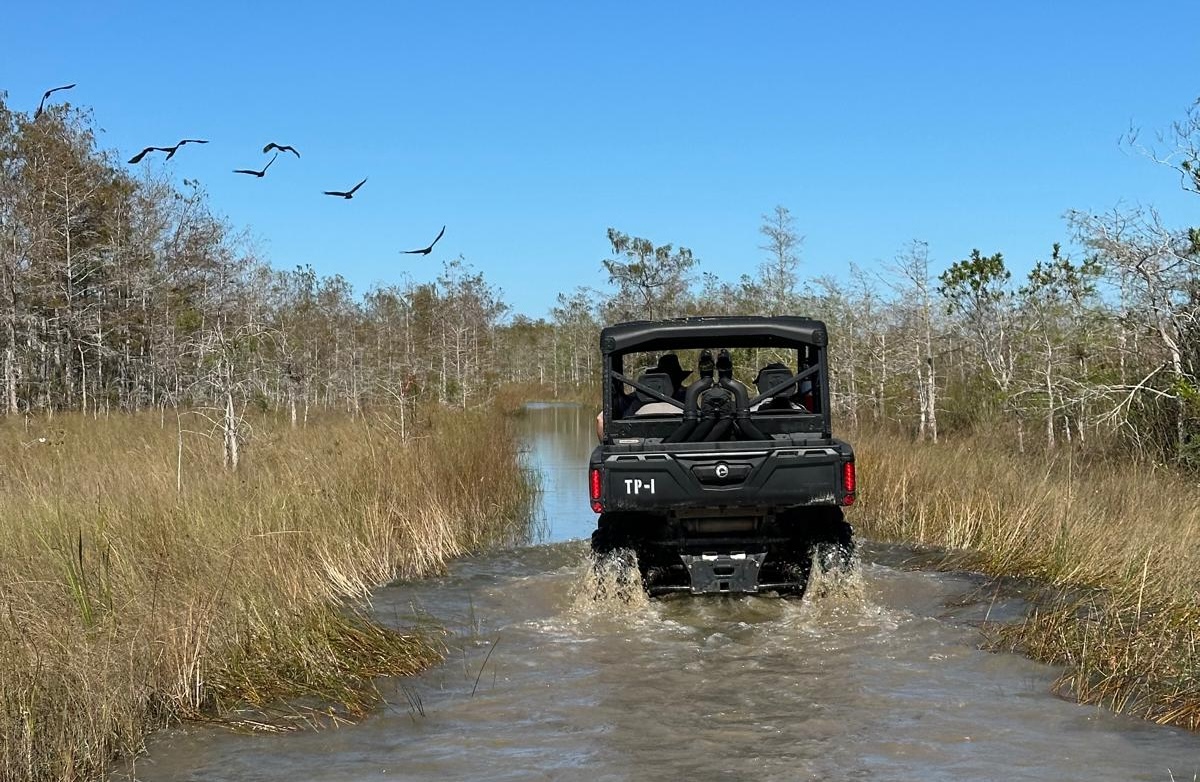
The compromise created a new land management model entirely. The Miccosukee and Seminole Tribes retained the right to continue their customary uses of the land. Hunters kept access to their hunting grounds, and landowners already within the boundaries were allowed to stay. Oil and gas operations, cattle grazing, and off-road vehicle use, activities unthinkable in most national parks, remained permitted under Big Cypress National Preserve's enabling legislation.
Big Cypress Today
Today, Big Cypress spans 729,000 acres, roughly the size of Rhode Island, and continues to serve the purpose that drove its creation. Its cypress domes, prairies, and sloughs filter and store the fresh water that sustains the Everglades downstream, while providing habitat for the Florida panther, the ghost orchid, and hundreds of other species found almost nowhere else on Earth.
Visitors exploring Big Cypress National Preserve today can experience the scenic 24.5-mile Loop Road, off-road vehicle trails found almost nowhere else in the National Park System, the Oasis and Nathaniel P. Reed Visitor Centers, a segment of the Florida National Scenic Trail, and wildlife viewing for alligators, wading birds, and, with patience, the elusive Florida panther.
None of this would exist without the people who refused to watch a swamp become a runway. Their compromise created something the world had never seen before: a landscape protected for its ecology and open to the traditions of the people who called it home.
Protecting the Legacy of Big Cypress
That legacy is what The Alliance for Florida's National Parks helps carry forward today. Through donor support, The Alliance funds the education and exploration programs that introduce new generations to Big Cypress, ensuring the story of this hard-won national preserve continues for decades to come.
Learn more about how you can support Florida's national parks at FloridaNationalParks.org