
A New National Park
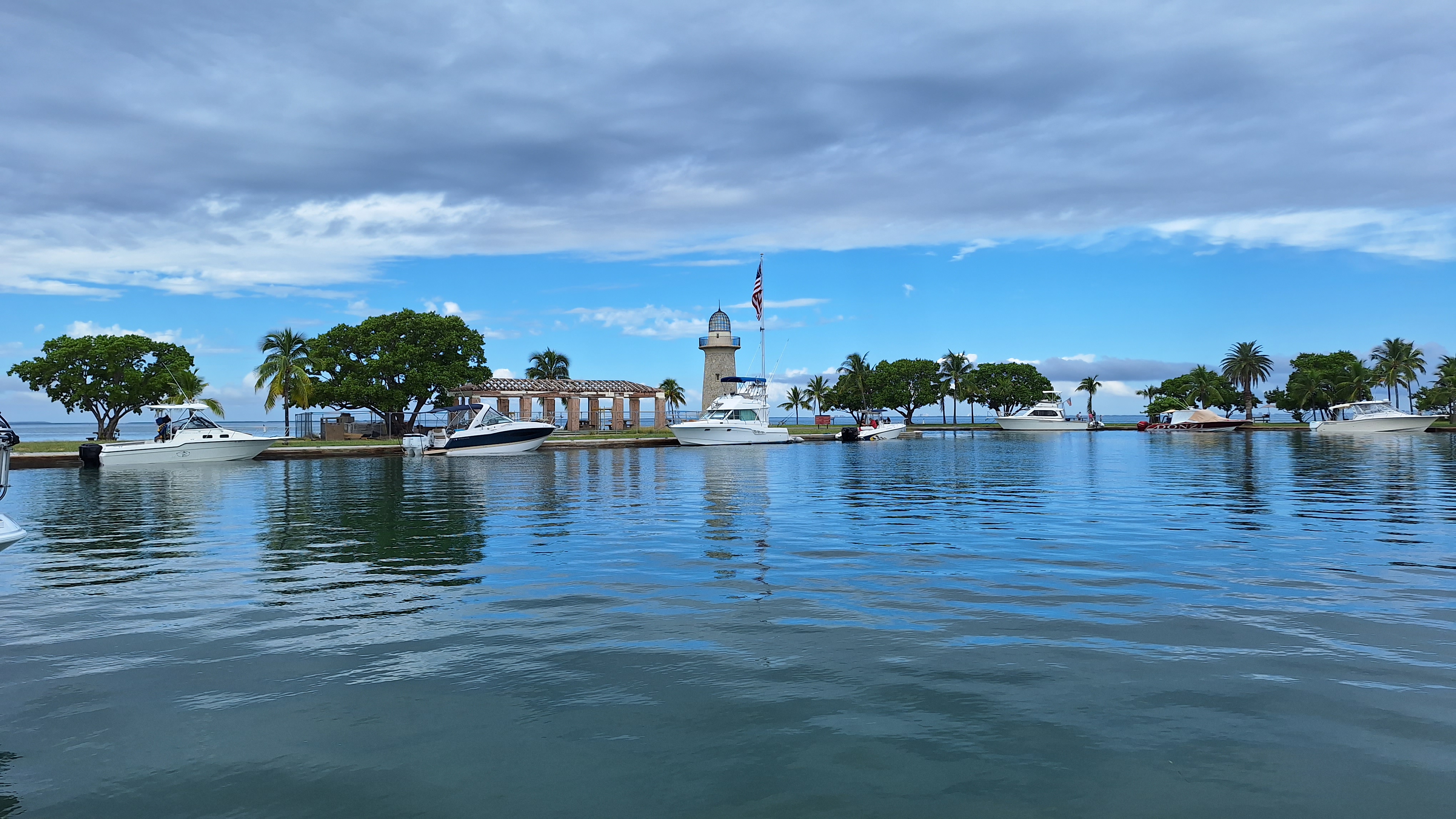
October 13 marks Jones Day, a day to remember the remarkable Jones family and the lasting legacy they left in Biscayne National Park.
The story of the Jones family begins with Israel Lafayette Jones, who traveled from Raleigh, North Carolina, to Florida in 1892 in search of greater opportunities. After a freeze devastated the citrus groves of Central Florida, Israel continued south, eventually arriving in Coconut Grove, near Biscayne Bay. There, he met Mozelle Albury, and together they built a life and raised two sons, King Arthur and Sir Lancelot.
In 1897, Israel purchased Porgy Key for $300 and began building a home for his family. Through hard work and determination, the Jones family cleared the dense vegetation and rocky landscape and carved channels by hand, transforming the island into a productive farm. They grew pineapples, key limes, and tomatoes, and eventually became one of the largest producers of pineapples and key limes in the Florida Keys.
Life in the Keys brought many challenges, and the family endured subtropical heat, insects, storms, and dense vegetation. Yet these same conditions were part of what made the Keys so unique. The islands and surrounding waters supported an extraordinary diversity of life, from tropical hardwood forests and mangroves to seagrass meadows, coral reefs, and the many fish, birds, and reptiles that depend on them.
For generations, the Jones family lived closely connected to these natural resources. As Miami's population grew, Biscayne Bay became increasingly popular for fishing and recreation. Elliott Key, the largest of the keys, had long been home to farmers, fishermen, spongers, and wreckers. By the early twentieth century, developers had also begun to see the islands as places for vacation homes and resorts.
In 1916, the Cocolobo Club was established on Adams Key. The private club became a renowned retreat for fishing and recreation, attracting prominent visitors such as Herbert Hoover, Lyndon B. Johnson, John F. Kennedy, and Richard Nixon. Lancelot Jones became a well-known fishing guide and shared his knowledge of the waters with many of the club's guests.
The popularity of the islands brought greater attention to the beauty and abundance of Biscayne Bay, but it also brought the possibility of development on a much larger scale.
In the 1960s, plans emerged for new communities, roads, hotels, and other developments throughout the islands. One of the most significant proposals was Seadade, a planned industrial seaport that would have included a deepwater channel and an oil refinery. Such development threatened to dramatically alter the bay and the ecosystems that had supported generations of people and wildlife.
People like Lancelot Jones understood that the shallow waters of the bay provided important nursery habitat for fish and supported tropical plants, migratory birds, and other wildlife.
As plans for large-scale development gained momentum, local residents, fishermen, scientists, conservationists, and community leaders came together to protect this unique place. Their efforts helped lead to the establishment of Biscayne National Monument in 1968. "I like the word monument. It means that things here are going to stay pretty much as they are today," said Lancelot Jones.
The Jones family also faced decisions about the future of their land. After generations of living and working on the islands, Lancelot Jones ultimately chose to sell the family's property to the federal government in 1970, with the promise that he could spend the remaining years of his life on the keys.
Lancelot Jones was a well-known figure in the area. Many Elliott Key residents and students from across Miami-Dade County visited him. He was known for his sponge talks and deep knowledge of the area, and in exchange, he would ask for payment in the form of a key lime pie. He also helped train the park's first rangers, allowing them to see the park through his eyes.
When we look across Biscayne Bay today, we can still see the place much as the Jones family once saw it: a home for marine life, protected waterways, and a resilient ecosystem strong enough to withstand the storms and harsh elements that have shaped it into what it is today.
The Jones family's story reminds us to protect what we love and share what we know.
Story by Nikki A.


%20(1).avif)
%20(1).avif)